
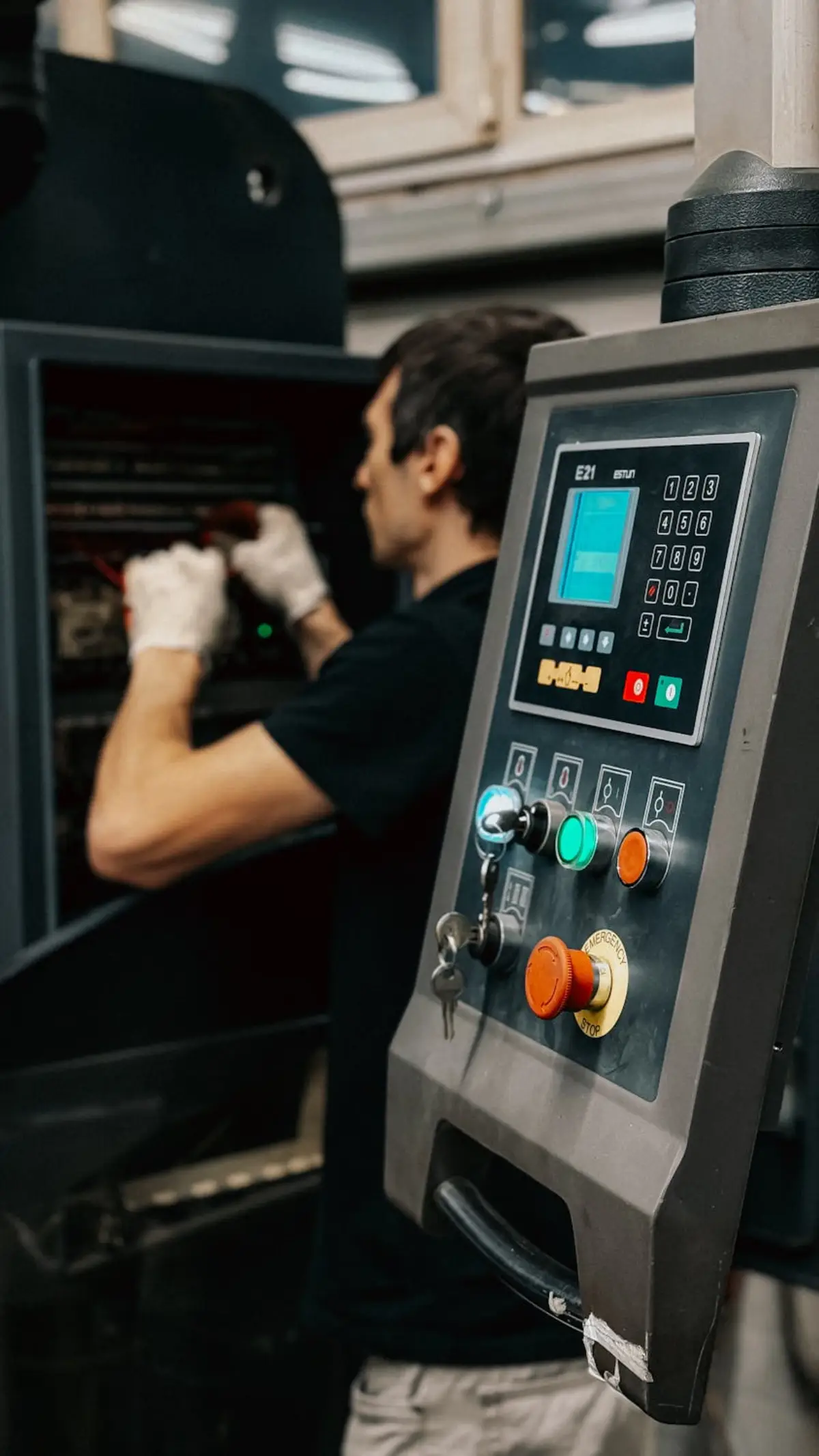
The practical starting point for CNC setup reduction is to time the full changeover, separate tasks that require a stopped machine from tasks that do not, and improve the sequence without weakening safety or first-part quality. This is the core of SMED, or Single-Minute Exchange of Die, applied to machining.
Measure from the last conforming part of the outgoing job to the first conforming part of the incoming job. That window includes fixture and tool changes, program and offset work, first-article machining, inspection, corrections, and any waiting or searching in between. A narrow measurement can make a setup look faster while the machine is still unavailable for production.
What CNC Job Shop Consulting Changes
SMED was developed around the idea that setup work can be classified as internal or external. Internal tasks can only happen while the machine is stopped. External tasks can be completed while the current job is still running or before the changeover begins. The objective is not to rush the operator; it is to remove avoidable downtime through better preparation, workholding, information, and sequencing.
Shorter, more repeatable setups can support smaller batches and more flexible schedules, but elapsed time is not the only measure. Track first-article acceptance, corrections, safety concerns, and downstream disruption with the setup time. If speed creates scrap or rework, the method is not finished.
Five Steps for CNC Job Shop Consulting
Step 1: Video and Time Your Current Setups
Before changing anything, document what actually happens during a changeover. Set up a camera—a phone on a tripod can work—and record several complete setups that represent the part mix and normal operating conditions. Time each task and note waits, travel, corrections, and interruptions that a single total would hide.
The recording may reveal time spent walking to the tool crib, searching for fixtures, waiting for material handling, looking up program numbers, or resolving missing information. Record each delay instead of assigning it to operator pace; the useful question is what condition allowed the delay to enter the stopped-machine window.
Step 2: Classify Each Task as Internal vs. External
Internal tasks are activities that can only be performed when the machine is stopped: mounting a fixture, loading a program, setting work offsets. External tasks are everything that could be done while the previous job is still running: gathering tools, presetting tool assemblies, staging raw material, reviewing the next job's setup sheet.
Review the recording and categorize every activity. Mark any task that could be completed safely before the last part comes off. This classification usually reveals preparation work that can leave the stopped-machine window without requiring new equipment.
Step 3: Move External Tasks Outside the Setup Window
Create a preparation checklist for each job or job family. Assign who will pull tools, stage raw material, review the setup sheet, and verify program availability early enough to resolve a missing item before the current job finishes.
The goal is straightforward: when the last part comes off the machine, everything needed for the next job is already at the machine. No walking, no searching, no waiting.
Step 4: Simplify and Streamline Internal Tasks
For the tasks that genuinely require machine downtime, look for ways to reduce their duration:
- Quick-change tooling: Hydraulic, pneumatic, or zero-point clamping systems can replace repeated manual bolting when the application, safety review, and economics support the change.
- Preset tools offline: A presetter can measure tool lengths and diameters while the machine continues running. Where the control and shop procedure allow it, validated offset data can then be transferred without touching off every tool at the machine.
- Standardize fixture locations: If fixtures always mount in the same position on the table, you eliminate the need to re-indicate every setup. Dowel pins, fixture plates with grid patterns, and zero-point clamping systems all accomplish this.
- Standardize program structure: Consistent program headers, tool numbering conventions, and work coordinate assignments mean operators do not have to decode each program from scratch.
Step 5: Document, Train, and Sustain
Reduced setup times only stick if the new methods are documented and every operator is trained. Create visual setup sheets with photos showing tool layouts, fixture positions, and material staging locations. Standard work instructions should live at the machine, not in a binder in the supervisor's office.
Run the revised process across representative jobs and shifts, then record it again. Compare the same last-good-part-to-first-good-part window with the baseline and adjust the standard where needed. Revisit the procedure when part mix, tooling, equipment, or staffing changes; structured manufacturing training can help make the method repeatable across operators.
Illustrative CNC Setup Time Worksheet
The following illustrative worksheet shows how a team might separate preparation from stopped-machine work and compare a revised method with its baseline. Use your own time study rather than treating these example minutes as a benchmark or promised result.
| Task | Before (min) | After (min) | Change |
|---|---|---|---|
| Gather tools and fixtures | 12 | 0 (external) | -100% |
| Remove previous fixture | 6 | 1 (quick-change) | -83% |
| Mount new fixture | 8 | 1.5 (quick-change) | -81% |
| Load and verify program | 5 | 1 (networked) | -80% |
| Set tool offsets (touch-off) | 10 | 0 (preset offline) | -100% |
| Set work offset / indicate | 7 | 0.5 (standardized) | -93% |
| First article run and check | 5 | 4 | -20% |
| Total | 53 | 8 | -a context-dependent level |
A first pass should establish a repeatable sequence and expose the remaining internal work. Later trials can evaluate whether fixture changes, presetting, program transfer, or other tooling investments are justified. Keep each result tied to the specific machine, part family, staffing, and verification requirements in the study.
Common Mistakes That Stall Setup Reduction
Three mistakes can stall a setup reduction project: changing too many variables at once, excluding the operators who perform the work, and failing to document the revised method. Involve operators in the time study and trial so the standard reflects real machine conditions, safety requirements, and job-to-job variation.
Another mistake is treating the first trial as a finished result. Recheck the method after different operators, part families, and schedule conditions have tested it. That is how the team separates a repeatable improvement from a one-time fast changeover.
Measuring the ROI of Setup Time Reduction in Machining
Setup time reduction creates usable capacity only when the saved time occurs on a machine that needs that capacity and the schedule can put it to work. Calculate weekly time recovered as the average verified minutes saved per setup multiplied by the number of relevant setups, then divide by 60. Keep that operating measure separate from revenue claims until the shop confirms how the hours will be used.
Compare the recovered hours with the cost of preparation labor, tooling, fixtures, presetting, documentation, training, and verification. This prevents a faster-looking changeover from hiding cost or delay somewhere else in the process.
Track these metrics before and after implementing setup reduction CNC improvements to quantify progress:
- Average changeover time by machine: Measured from last good part of the previous job to first good part of the next job. Record this weekly for each machine to establish a trend line.
- Changeover count per shift: The number of setups directly impacts how much capacity you recover from each minute saved. Higher-mix shops see proportionally greater returns from setup reduction.
- First-pass yield after changeover: Track whether the first article conforms and what corrections are required. A shorter elapsed time is not a gain if the revised setup increases scrap or rework.
- Spindle utilization rate: The percentage of available machine hours spent actually cutting metal. This is the ultimate measure of whether setup reduction efforts are translating into productive output.
Setup Reduction Strategies by Machine Type
Different CNC machine types present different setup reduction challenges. The principles of separating internal from external tasks apply universally, but the specific tactics vary by machine architecture.
Vertical machining centers (VMCs) may benefit from standardized vise jaw sets and fixture plates with grid-hole patterns. For recurring part families, one fixture base with interchangeable top tooling can reduce repeated locating and indicating work.
Horizontal machining centers (HMCs) with pallet changers can move work to an offline pallet while the machine cuts on the active pallet. Tombstone and multi-face fixture decisions should follow the part family, access, inspection, and scheduling requirements rather than setup time alone.
CNC lathes present setup reduction opportunities around chuck jaws, collet systems, bar-feed components, and tool offsets. Preparing suitable jaws or guide components away from the machine can move work outside the changeover window when the process and verification plan support it.
CNC grinders require special attention to wheel dressing and qualification. Pre-mounting grinding wheels on balanced arbors offline and using quick-change spindle adapters converts what is often the longest internal task into an external one. Wheel qualification routines stored in the control further reduce post-changeover setup time for surface and cylindrical grinders.
Building a Setup Reduction Culture That Sustains Results
The difference between a one-time improvement and a durable setup method is whether the revised sequence becomes normal work. A focused SMED event can reveal a better process, but the result depends on current documents, available tooling, clear preparation ownership, and reinforcement across shifts.
A sustainable setup reduction practice starts with visible measurement. Review actual changeover times by machine or part family often enough to see variation and regression. Discuss the pattern with the people doing the work; the purpose is to find conditions that changed, not to turn an incomplete time measure into an operator score.
Cross-training protects the method from depending on one person's memory. Document the critical steps with photos and clear verification points, then have more than one operator perform the setup from the standard. Structured manufacturing training can help teams practice the sequence, surface ambiguous instructions, and update the document from real use.
A regular setup review closes the loop. Review changeover data, investigate where time or variation has increased, and select one next improvement target. Include the people performing the setups and rank ideas by the likely minutes saved, changeover frequency, implementation effort, and quality or safety risk.
Finally, connect setup reduction to broader shop performance. A verified 10-minute reduction across four daily setups equals 40 minutes of potential machine availability that day. Whether that time becomes additional output depends on the constraint, schedule, staffing, and downstream flow, so review the setup measure with those operating conditions.
When to Bring In Outside Expertise
A shop can begin with the five steps above. Outside support may be useful when setups involve complex multi-axis fixturing, the team is comparing workholding or presetting investments, different shifts cannot reproduce the revised method, or previous setup events did not hold under normal production conditions.
This article explains the working method. If your team needs help observing the changeover, separating internal and external work, testing a revised sequence, or training across shifts, review our setup reduction consulting. Related support includes tooling solutions for workholding constraints and manufacturing training for repeatable operator methods.
CNC Job Shop Consulting Questions
What is CNC setup reduction?
CNC setup reduction is the disciplined work of shortening the time between the last good part from one job and the first good part from the next. It typically uses SMED principles to prepare tools, material, programs, and documents before the machine stops, then simplify the tasks that must happen during downtime.
What should be included when measuring CNC setup time?
Measure from the last conforming part of the outgoing job to the first conforming part of the incoming job. Include removal, cleaning, fixture and tool changes, program and offset work, first-article machining, inspection, corrections, waiting, searching, and travel that occur during that window.
Can a shop reduce CNC setup time without buying quick-change equipment?
Often, yes. Start by staging tools and material, confirming program readiness, assigning preparation ownership, removing searches and waits, and documenting the best known sequence. Use the measured result to decide whether presetters, fixture plates, zero-point workholding, or other equipment justify their cost.
How do you prevent faster CNC setups from causing quality problems?
Keep first-good-part acceptance inside the setup definition, identify critical verification points in the standard work, and track first-article results alongside elapsed time. A change is not an improvement if it saves minutes but creates scrap, rework, unsafe motion, or downstream delay.
Published by The Streamline Group — manufacturing consultants specializing in shop-floor efficiency for CNC job shops and OEMs. We help manufacturers increase throughput, reduce setup times, and build more capable teams without adding headcount or equipment.